

Heading to Fiji from Australia? Here’s everything you need to know about Fiji visa requirements for Australians.
The good news is that Australia is listed as a visa-exempt country by the Fiji Immigration Department, which means Australians don’t need a visa for tourism or short-term visits. Upon arrival, visitors are issued a visitor permit, which grants them official permission to stay for holidays, to visit family or friends, or for other short-term non-work purposes.
To enter Fiji, Australians will need:
- A valid Australian passport with at least six months' validity beyond the intended departure.
- A completed Fiji arrival card, which providesyour travel and personal details to immigration.
- A return or onward ticket to show you will leave Fiji at the end of your visit.
- Proof of accommodation, such as hotel bookings or a letter from a host.
- Sufficient funds to support their stay, typically around FJ $1,000 per month, but this will be assessed by immigration officers.
- Compliance with immigration officer requirements on arrival, including any checks by Fiji authorities
Read on to learn more about Fiji visa requirements for Australian passport holders, including visitor permits, extensions, and other essential entry rules to ensure a smooth and stress-free trip.
Do Australians need a visa for Fiji?
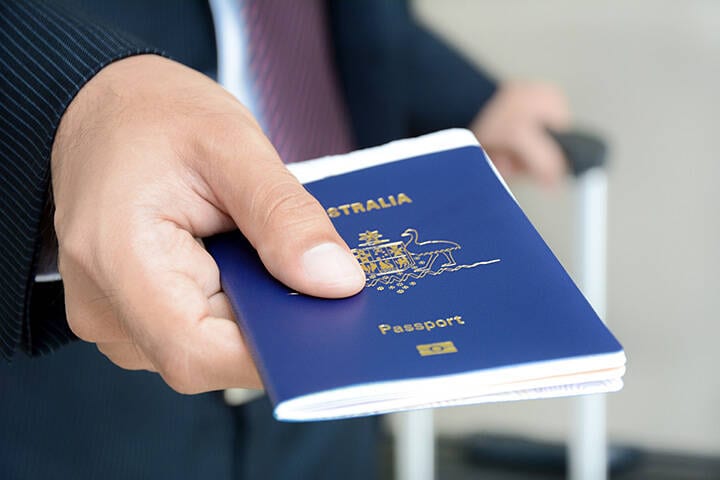
Australian travellers do not need a visa for short-term visits to Fiji. According to the Fiji Immigration Department, Australia is on Fiji’s visa-exempt list, which means Australians can enter Fiji without applying for a visa in advance.
Under Fiji visa requirements for Australians, visitors are issued a visitor permit upon arrival, which serves as official permission to stay in Fiji for holidays, visiting family or friends, or other short-term non-work purposes. This visitor permit generally allows stays of up to four months for tourism.
It’s important to note that the visitor permit only covers short-term visits – work, study, or long-term relocation require a separate visa arranged before travel.
How Australians enter Fiji
Australians receive their visitor permit directly at the border upon arrival. Unlike a traditional visa, there’s no need to apply before travelling. Under Fiji visa requirements for Australians, the visitor permit is granted immediately by immigration officials, allowing entry for tourism or family visits.
Length of stay and conditions
According to Fiji visa requirements, visitor permits for Australians are generally valid for up to four months, which is usually sufficient for typical holidays, family, or short-term visits..
To receive a visitor permit, travellers should have:
- A valid passport with at least six months’ validity from the date of entry.
- A return or onward flight ticket.
- Proof of prepaid accommodation in Fiji.
- Evidence of sufficient funds to cover their stay if they haven’t pre-booked their accommodation, as assessed by immigration officers.
If you’d like to stay longer, you may be able to apply for a short extension before your original permit expires. Extensions are granted subject to approval by Fiji Immigration, so it’s important to apply while your current permit is still valid and provide any requested information, such as proof of accommodation or funds for the extended stay. This flexibility allows families or longer-term visitors to adjust their travel plans without leaving the country, but extensions are not guaranteed and are assessed on a case-by-case basis.
Visitor permit extensions
For stays beyond four months, Australians can apply for a Visitor Permit Extension before their current permit expires. This must be done in person at any Fiji Immigration office (Suva, Nadi, Lautoka) or by contacting fidqueries@gmail.com for guidance.
Processing typically takes around seven working days and is subject to approval by Fiji Immigration. A fee of FJ $191 applies. You will need your passport, arrival stamp, completed Form F, proof of accommodation, proof of funds, and return or onward ticket.
Visa on Arrival vs visitor permit
A visa on arrival and a visitor permit are both forms of entry permission, but they work differently.
- Visa on Arrival: This is a temporary visa that some countries, including Fiji for certain nationalities, require travellers to apply for and pay for upon arrival at the airport. It grants official permission to enter the country for a limited period.
- Visitor Permit: Instead of a visa, under Fiji visa requirements for Australians, they receive a visitor permit automatically at the border. This permit is free and serves as official permission to stay in Fiji for short-term tourism, family visits, or other non-work purposes. Extensions of the visitor permit will incure a cost of FJ$93 (Approx. AU$60).
The visitor permit:
- Is granted immediately upon arrival.
- Typically allows a stay of up to four months.
- Can be extended for a short period, subject to approval by Fiji Immigration, if applied for before the original permit expires.
- Requires compliance with standard entry conditions, such as a valid passport, return or onward ticket, accommodation details, and sufficient funds, as checked by immigration officers.
In short, the visitor permit replaces the need for a visa for Australians, making travel to Fiji simple, straightforward, and perfect for holidays or short-term visits.
Visitor Permit Extensions For stays beyond four months, Australians can apply for a Visitor Permit Extension before their current permit expires. This must be done in person at any Fiji Immigration office (Suva, Nadi, Lautoka) or by contacting fidqueries@gmail.com for guidance. Processing typically takes around seven working days and is subject to approval by Fiji Immigration. A fee of FJ $191 applies. You will need your passport, arrival stamp, completed Form F, proof of accommodation, proof of funds, and return or onward ticket.
When Australians do need a visa for Fiji
Fiji visa requirements state that Australians can enter Fiji without a visa for up to four months as a visitor, but a visa is required before travel if you plan to:
- Stay longer than the standard visitor period
- Study in Fiji
- Work in Fiji; or
- Relocate or live long-term in Fiji.
Student Visa
If you are planning to study in Fiji, you must apply for a Student Visa before travelling. This requires:
- Acceptance letter from a recognised Fijian institution
- Proof of funds to support your stay
- Passport copy
- Police clearance
- Medical report
- Fee of FJ $480
Student visas are usually valid for the duration of your course and may be renewed.
Work visa
To work in Fiji, a Work Visa is required, which must be lodged by a local employer before arrival. Applicants submit:
- Job offer and contract
- Employer support documents
- Police clearance
- Medical report
- Fee of FJ $480 per applicant
Work visas are generally valid for up to three years and may be renewed if employment and residency requirements continue to be met.
Residence Permit (Permanent Relocation)
For permanent relocation, a Residence Permit (PR) is required. This long-term visa allows you to live independently of employment and can be granted through investment, retirement, marriage to a Fijian citizen, or after holding a Work Visa for five continuous years. Requirements include:
- Completed Form B
- Valid passport copy and two passport‑size photos
- Police clearance (issued within the last six months)
- Medical examination report (issued within the last three months)
- Proof of funds or investment (bank statements, investment deed, or retirement income) to meet the minimum for your PR category
- Tax compliance certificate from the Fiji Revenue & Customs Service
- If applying as a spouse; marriage certificate, and partner’s Fijian citizenship proof
- If applying as a retiree; evidence of pension/retirement income meeting the required threshold
- Application fee of FJ $1,905 (payable at any immigration office)
It’s important to note that all visas must be obtained before arrival in Fiji; they cannot be issued or extended upon arrival for study, work, or residency. Meeting Fiji visa requirements also includes standard entry conditions for all travellers, such as having a valid passport (at least six months beyond departure), proof of funds, a return or onward ticket, and accommodation details. Overstaying can result in fines and potential refusal of future entry.
Entry requirements for Australians travelling to Fiji
Australians travelling to Fiji for tourism or short-term visits must meet a few standard Fiji visa requirements to ensure a hassle-free arrival. Immigration officers will check that you have the necessary documents and meet basic conditions for your stay.
Key requirements include:
- Valid Australian passport: your passport must be valid for at least six months beyond your intended departure from Fiji.
- Proof of onward or return travel: a confirmed ticket showing you will leave Fiji at the end of your visit.
- Evidence of accommodation: confirmation of where you’ll be staying, such as hotel bookings or a letter from a host or sufficient funds for your stay, typically around FJ $1,000 per month. This can be shown via bank statements, or cash.
- Compliance with Fiji Immigration officers: you may be asked questions about your visit, and it’s important to answer truthfully and follow any instructions given.
Meeting these requirements will ensure you can enjoy your stay without issues, whether visiting for holidays, family trips, or short-term non-work purposes.
Passport validity rules for Fiji
To enter Fiji, Australians must have a valid passport with at least six months’ validity beyond the date they plan to leave the country. This is standard for all visitors and ensures that your passport remains valid for the duration of your trip. It’s also a good idea to carry a copy of your passport bio-page in case of emergencies.
Health and vaccination entry requirements for Fiji
Fiji has minimal health requirements for travellers from Australia:
- COVID-19: No COVID-19 test or vaccination is currently required.
- Yellow fever: A certificate is only required if arriving from, or transiting through, a yellow-fever risk country within 10 days.
- Standard health screening may be conducted on arrival, including temperature checks and basic health questions.
While no additional vaccinations are mandatory, travellers are encouraged to be up to date with routine vaccines such as tetanus, diphtheria, polio, and hepatitis A & B.
It's also worth being aware that Fiji has a risk of dengue, Zika, and chikungunya, which are transmitted by mosquitoes.
To reduce your risk:
- Use insect repellent containing DEET or picaridin.
- Wear long-sleeved clothing and pants, especially during early morning and evening.
- Stay in accommodations with screens, air-conditioning, or mosquito nets.
Official resources and websites for Fiji visa information
For the most accurate and up-to-date information, always refer to official sources:
FAQs about Fiji visa and entry requirements
-
What are the Fiji visa requirements for Australian passport holders?
Australian passport holders do not need a visa to enter Fiji for tourism. On arrival, they receive a visitor permit that allows entry for short stays. Travellers must meet basic Fiji visa requirements, including having a valid passport, a return or onward ticket, and enough funds to support themselves during their visit.
-
How long can Australians stay in Fiji without a visa?
Australians can stay in Fiji for up to four months on a standard visitor permit. During this time, travellers can explore, holiday, or visit family, but they cannot take up paid employment. It’s important to ensure your passport is valid for the duration of your stay.
-
Can Australians extend their stay in Fiji?
Yes, Australians can apply to extend their stay through Fiji’s Immigration Department before their initial four-month visitor permit expires, in line with Fiji visa requirements. Extensions are granted at the discretion of immigration authorities and may require proof of sufficient funds and a valid reason for staying longer. A fee pf FJ$93 will need to be paid for approved extensions.
-
Is Fiji visa-free for Australians?
Yes. Australians can enter Fiji without a visa for tourism or short visits. On arrival, they are granted a visitor permit, allowing them to stay for a limited period, provided they have a valid passport, a return or onward ticket, and sufficient funds to cover their stay.
-
What are the Fiji visa rules for business travel?
Australians travelling to Fiji for short-term business do not need to apply for a visa before arrival. Instead, they are issued a Business Visitors Permit on arrival, which is valid for 21 days and does not require prior approval.
This permit allows them to undertake activities such as:
- Business meetings and negotiations
- Consultancy work
- Research or study related to business
- Other work-related tasks
Travelling or working beyond the 21 days without the correct permit may result in removal from Fiji and could affect future entry.
-
What happens if you don’t meet Fiji’s entry requirements?
If you do not meet Fiji’s entry requirements, for example, if your passport is expired, you lack a return ticket, or you do not have sufficient funds, you may be refused entry at the border. In some cases, you could be detained until arrangements are made to return to your point of departure.
-
Do you need to be vaccinated to enter Fiji?
Vaccinations are not required for most travellers entering Fiji. This includes the COVID-19 vaccine.
The only exception is yellow fever, which is required if you are arriving from a country where the disease is present. While not mandatory, health authorities also recommend staying up to date with routine vaccines and considering travel-specific vaccines to protect against illnesses such as hepatitis A, hepatitis B, and typhoid.