.jpg?width=120&quality=80&fit=crop&format=auto&opt=true)
Bali holidays and package deals
Holidays in Bali
Bali can be whatever kind of holiday you want it to be. Spend your days between beaches and beach clubs in Seminyak or Canggu, slow down among the rice fields and temples of Ubud, relax at a resort in Nusa Dua or head south to Uluwatu for clifftop views and some of Bali's best surf.
Beyond the beaches, you'll find waterfalls, volcanoes, temples, markets, spas and plenty of opportunities to get out and explore. Whether you're planning a romantic escape, family holiday, wellness retreat or action-packed adventure, choosing the right part of Bali is the first step to creating the holiday you want.
Book your flight and accommodation package with Virgin Australia and start planning your Bali holiday, with great deals and Velocity benefits to enjoy. Need some more help planning your trip? Read on for the top things to do, where to stay, and more.
Where to stay in Bali
Choosing where to stay in Bali depends on the kind of holiday you want. Head to Ubud for culture, wellness and lush landscapes, choose Seminyak or Canggu for beaches, dining and nightlife, stay in Sanur or Nusa Dua for a more relaxed resort holiday, or head south to Uluwatu for surf, beaches and dramatic clifftop scenery.
It's also worth thinking about how much of Bali you want to explore. Traffic can make travel times longer than expected, so choosing a base close to the places and experiences you're most interested in can make a big difference to your holiday.
Ubud – for culture, wellness and nature
Surrounded by rice fields and tropical greenery, Ubud offers a very different experience from Bali's coastal resort areas. Stay here for temples, traditional arts and culture, yoga and wellness, markets, waterfalls and easy access to some of central Bali's most scenic landscapes.
Seminyak – for dining, shopping and an upscale beach stay
Seminyak combines beach time with some of Bali's best-known restaurants, boutiques, spas and beach clubs. It's a good choice for couples and groups of friends looking for a polished resort experience with plenty happening during the day and after dark.
Canggu – for surfing, cafés and beach clubs
Canggu is popular for its surf beaches, cafés, restaurants, wellness studios and beach clubs. Choose Canggu if you want a lively coastal base with a relaxed atmosphere and plenty of places to eat, drink and spend time by the water.
Kuta and Legian – for a lively and convenient stay
Kuta and neighbouring Legian put beaches, shopping, restaurants and nightlife close together. With a broad range of accommodation and easy access to many of southern Bali's attractions, the area can work well for first-time visitors, families and travellers who like plenty happening around them.
Sanur – for a quieter beach holiday
Sanur offers a more relaxed coastal atmosphere, with a long beachfront promenade, calmer waters, restaurants and resorts. It's a popular choice for families and couples looking for a quieter stay while remaining within easy reach of other parts of southern Bali.
Uluwatu – for surf, beaches and clifftop views
On Bali's Bukit Peninsula, Uluwatu is known for dramatic cliffs, surf breaks, beaches and Uluwatu Temple. Stay here if your ideal Bali holiday centres on the ocean, beach clubs and a slower pace away from Bali's busier resort areas.
Nusa Dua – for resort-style relaxation
Nusa Dua is well suited to travellers looking for a resort-focused holiday, with beachfront accommodation, landscaped resort areas and water activities close by. It's particularly popular with families and couples who want to spend more of their holiday relaxing around their accommodation and the beach.
Read our guide to where to stay in Bali to find the area that best suits your holiday.

Things to do in Bali
Bali offers much more than a beach holiday, with temples, rice terraces, waterfalls, volcanoes, coral reefs and cultural experiences spread across the island. Whether you want adventure, relaxation or a bit of both, there's plenty to build into your Bali itinerary.
Discover Bali's temples and culture
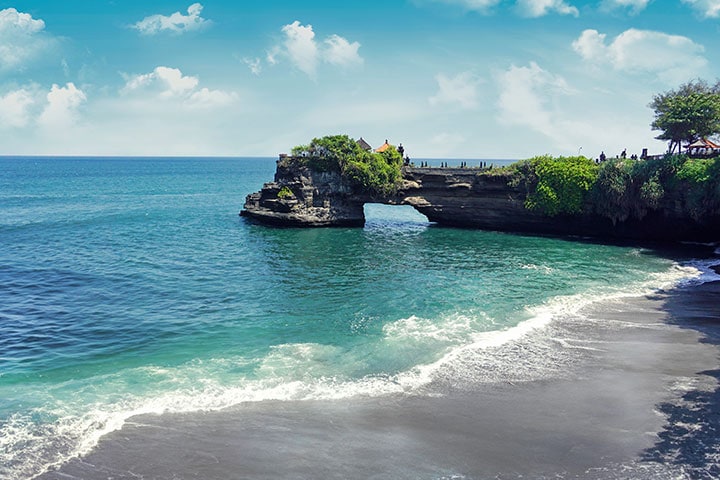
Temples are an important part of Bali's landscape and culture. Visit landmarks such as Tanah Lot and Uluwatu Temple, explore temples and historic sites around Ubud, or experience traditional Balinese dance and ceremonies during your stay.
Explore Ubud and Bali's rice terraces
Head into central Bali to discover Ubud's temples, markets and cultural attractions, then venture into the surrounding countryside for rice terraces, rainforest and waterfalls. Tegallalang is one of Bali's best-known rice-growing landscapes and an easy addition to a day exploring around Ubud.
Chase waterfalls
Bali's tropical interior is home to waterfalls hidden among rainforest and villages. Some can be reached relatively easily, while others involve longer walks, so choose an experience that suits your fitness level and itinerary.
Hike Mount Batur
For an early-morning adventure, hike Mount Batur to watch the sun rise over Bali's volcanic landscape. Guided sunrise hikes are a popular option, with an early start rewarded by sweeping views across the surrounding mountains and Lake Batur.
Surf, snorkel and dive
Bali offers plenty of ways to get out on the water. Surf breaks can be found around areas such as Canggu and Uluwatu, while snorkelling and diving trips offer opportunities to discover coral reefs and marine life around Bali and its neighbouring islands.
Relax and recharge
Make time for the slower side of Bali with a massage, spa treatment or yoga session. Ubud is particularly well known for wellness retreats and yoga, while spas and treatments are widely available across Bali's main resort areas.
Take a trip to a nearby island
Add another dimension to your Bali holiday with a trip to Nusa Penida or Nusa Lembongan. Beaches, cliffs, snorkelling and diving are among the highlights, with fast boats connecting the islands with Bali.
Discover more things to do in Bali.

What to know before travelling to Bali
There are a few extra things to organise for an international holiday to Bali. Check the latest Indonesian entry requirements on Smarttraveller before travelling and make sure you've considered how you'll pay, stay connected and keep your devices charged once you arrive.
Passport and entry requirements
Australian travellers need a valid passport to enter Indonesia, with at least six months' validity remaining from the date of arrival. Indonesian authorities can be strict about passport condition, so check that your passport isn't damaged before travelling.
Australian passport holders travelling for tourism generally need a Visa on Arrival (VoA) or electronic Visa on Arrival (e-VoA). Travellers may also need to complete the required Indonesian arrival declaration and provide proof of onward or return travel.
Entry requirements can change, so always check the latest requirements before your holiday.
Currency and paying in Bali
Bali uses the Indonesian rupiah (IDR). Credit and debit cards are widely accepted at hotels, resorts, larger restaurants, shops and established businesses in Bali's main tourist areas.
Cash is still useful for markets, smaller restaurants and shops, local purchases and some businesses outside the major tourist areas. ATMs are widely available in popular destinations, but it's a good idea to have some Rupiah with you rather than relying entirely on electronic payments.
SIM cards and staying connected
Mobile data can make getting around Bali much easier, particularly when using maps, booking transport or contacting drivers and accommodation. Local SIM cards and eSIMs are available, while international roaming may also be an option depending on your Australian mobile provider.
If you're planning to buy a local SIM, check the current registration requirements before travelling. Read our guide to Bali SIM cards for more information.
Power points in Bali
Bali generally uses Type C and Type F power points, so Australian travellers will need a suitable travel adaptor for most Australian plugs.
Language
Indonesian is the national language, while Balinese is also widely spoken on the island. English is commonly used in Bali's major tourist areas, hotels, resorts, restaurants and attractions.
When is the best time to visit Bali?
Bali is warm throughout the year, but May to October is generally the best time to visit for drier weather, lower humidity and good conditions for beaches, sightseeing and outdoor activities. The wet season runs from November to April, bringing higher humidity and more frequent tropical rain.
Weather can also vary depending on where you stay. Bali's southern coastal areas can experience different conditions from the greener, higher-altitude areas around Ubud and the island's mountainous interior.
Bali's dry season
May to October is Bali's dry season, with generally less rainfall and lower humidity. It's a popular time for beach holidays, surfing, snorkelling, diving, hiking and exploring the island.
Bali's wet season
November to April brings warmer, more humid conditions and a greater chance of tropical showers. Rain doesn't necessarily last all day, and the wet season brings lush rice fields, rainforest and waterfalls, making it a good time for wellness, cultural experiences and exploring Bali's greener interior.
Does the weather vary across Bali?
Yes. Bali's coastal and inland areas can experience different conditions. Southern beach areas such as Seminyak, Canggu and Nusa Dua are generally warmer, while Ubud and central Bali tend to be wetter and slightly cooler. Higher mountain areas can be cooler again, particularly in the mornings and evenings.
If you're planning to visit nearby islands during the wet season, keep in mind that rougher sea conditions can sometimes affect fast boat and ferry services.
Read our guides to the best time to visit Bali and Bali weather and climate for more information.
Getting around Bali
How you get around Bali will depend on where you're staying and how much of the island you want to explore. Taxis, rideshare apps and private drivers are among the most practical options for visitors, while walking can work well within individual resort areas.
Distances on a map can be misleading in Bali. Traffic can add considerably to journey times, particularly around the busy southern tourist areas, so factor travel time into your itinerary when choosing where to stay and how much you plan to see in a day.
Grab and Gojek
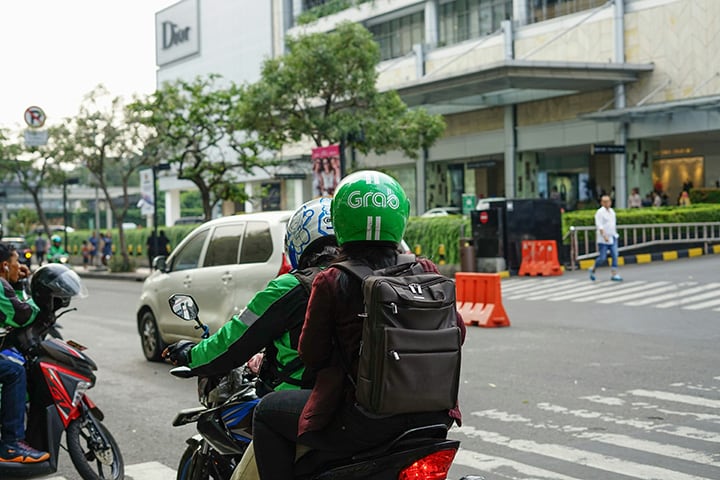
Ride-hailing apps such as Grab and Gojek are widely used in Bali and offer car and motorbike transport in many tourist areas. Availability and pick-up arrangements can vary by location, so check your app when planning a journey.
Taxis
Taxis are widely available around Bali's main tourist areas. Metered taxis can be a convenient option for shorter journeys, particularly around southern Bali and between nearby resort areas.
Private drivers
Hiring a private driver is a popular way to explore Bali, particularly if you're planning a full day of sightseeing or want to visit several attractions. It gives you more flexibility to create your own itinerary without having to organise separate transport for each journey.
Scooters
Scooters are common in Bali, but riding conditions can be challenging. Only consider hiring one if you have the appropriate licence, insurance and riding experience, and always wear a helmet and follow local road rules.
Walking
Walking can be convenient within areas such as Seminyak, Sanur, Ubud and Nusa Dua, particularly when restaurants, shops and attractions are close to your accommodation. Footpaths and traffic conditions vary, however, so not every area is equally pedestrian-friendly.
Airport transfers
Pre-booked transfers, taxis and rideshare services are available from I Gusti Ngurah Rai International Airport. Travel time will depend heavily on traffic and where you're staying, so allow more time when travelling to destinations further from southern Bali.
Getting to nearby islands
Fast boats connect Bali with nearby destinations including Nusa Penida and Nusa Lembongan. Departure points and journey times vary, so check your transfer arrangements in advance and allow enough time to reach the port.
Read our getting around Bali guide for more information on transport and travel times.
Planning your Bali holiday

Best time to visit
May to October

How long to stay
7–10 days

Where to stay
Ubud, Seminyak, Canggu, Sanur, Uluwatu or Nusa Dua

Entry requirements
Valid passport, visa and arrival declaration required*

Currency
Indonesian rupiah (IDR)

Power points
Type C & F – adaptor required
*Entry requirements apply and can change. Check current Indonesian entry and visa requirements before travelling.
Frequently asked questions - Holidays in Bali
How many days do you need for a Bali holiday?
Seven to ten days gives you time to experience more than one side of Bali without rushing. You could combine a few days around Seminyak, Canggu or the southern beaches with time in Ubud, Uluwatu or another part of the island. A shorter stay can work well if you plan to base yourself in one area, while a longer holiday gives you more time for day trips and nearby islands.
Where is the best place to stay in Bali?
The best place to stay in Bali depends on the kind of holiday you want. Ubud is a good choice for culture, wellness and nature, Seminyak combines beaches with dining and shopping, Canggu is popular for surfing, cafés and beach clubs, Sanur offers a quieter coastal stay, while Uluwatu is known for surf, beaches and clifftop scenery. Nusa Dua is well suited to travellers looking for a resort-focused holiday.
Which area of Bali is best for first-time visitors?
There isn't one best area for every first-time visitor. Seminyak offers easy access to beaches, restaurants, shops and nightlife, Sanur suits travellers looking for a quieter introduction to Bali, while Nusa Dua is convenient for a resort-style holiday. If you have enough time, combining a coastal area with a few nights in Ubud is a good way to experience two different sides of Bali.
Is Bali good for a family holiday?
Yes. Bali has a wide choice of family-friendly resorts, pools, beaches, water activities and cultural attractions. Sanur and Nusa Dua are popular with families looking for a more relaxed beach or resort stay, while areas such as Ubud can add wildlife, nature and cultural experiences to a family itinerary.
Do you need a scooter to get around Bali?
No. You don't need to hire a scooter to get around Bali. Taxis, ride-hailing apps and private drivers are widely used by visitors and can be more practical if you're unfamiliar with local roads. If you do choose to ride a scooter, make sure you have the appropriate licence and insurance, wear a helmet and are confident riding in Bali's traffic conditions.
Do Australians need a visa for a holiday in Bali?
Australian passport holders travelling to Bali for a holiday generally need a Visa on Arrival (VoA) or electronic Visa on Arrival (e-VoA). Passport validity, arrival declaration and onward travel requirements also apply. Indonesian entry requirements can change, so check the latest requirements before travelling.
Does Virgin Australia offer holiday package deals for Bali?
Yes! You can save on your next trip to Bali when you book a flight and hotel package. You can also enjoy free cancellation on select holidays. Velocity members can earn Velocity Points on eligible holidays and can redeem points or use Points + Pay on select holiday bookings.
*Holiday package rates shown may change, for reasons such as real-time inventory updates, occasional currency fluctuations and data refreshes. Your selected price may no longer be available at the time of payment, in which case we will provide you with the lowest available price for your selected room and flight. Final pricing will be displayed in the price breakdown prior to booking.
** This charge includes estimated amounts the travel service provider (eg: hotel) pays for their taxes, and/or taxes that we pay, to taxing authorities on your booking (including but not limited to sales, occupancy, and value added tax). This amount may also include any amounts charged to us and/or a fee that the travel service provider retains as part of the compensation for their services, which varies based on factors such as location, the amount, and how you booked. Hopper does not retain any of these amounts as compensation. For more details, please see the terms and conditions.