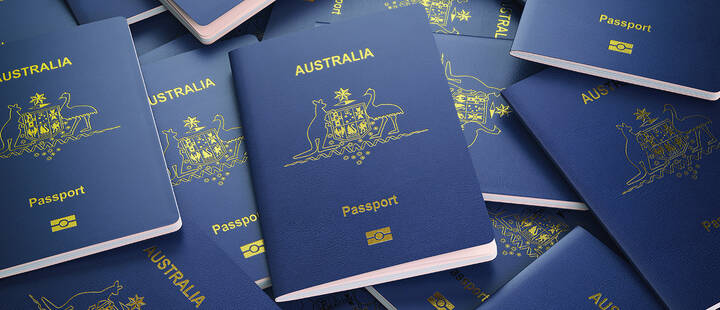

It can get confusing trying to figure out the essential admin for your trip to Bali, so we’re here to help break down the visa and entry requirements for Indonesia so all you have to worry about is planning that Bali itinerary!
To travel to Bali, Australians need a valid passport with at least six months validity, a Visa on Arrival (VoA) or an Electronic Visa on Arrival (e-VoA), proof of onward travel, a tourist levy, and the new All Indonesia Declaration Form, which combines customs, immigration, and biosecurity requirements into a single digital process, and replaces the Electronic Customs Declaration Form (e-CD) and SATUSEHAT Health Pass
Read on for more details on each.
Information regardingPlan ahead
Find more information on travelling to Indonesia. We also recommend you check and subscribe to updates with Smarttraveller.
What are the entry requirements for Bali?
For Australian citizens planning to visit Bali in 2026, the entry requirements are listed below. Click on each for more information and official links to forms.
- Visa on arrival (VOA) or Electronic Visa on Arrival (e-VOA)
- Bali tourism levy
- Valid passport
- All Indonesia Declaration Form (from 1 September 2025)
- Proof of onward travel
Jump to: Links to forms for travelling to Bali
Visa on Arrival (VOA) or Electronic Visa on Arrival (e-VOA)
As an Australian citizen travelling to Bali for tourism, you need a Visa on Arrival (VoA) or e-Visa on Arrival (e-VOA) to enter Indonesia. The temporary visa allows foreign tourists to remain in Indonesia for a maximum of 30 days, with the possibility to extend for an additional 30 days.
There are two ways to obtain your visa for Bali:
- Apply online for an E-Visa on Arrival via the e-VOA website no later than 48 hours before departing for Indonesia; or
- Obtain your Visa on Arrival at Bali Airport (I Gusti Ngurah Rai International Airport).
The VOA and e-VOA cost IDR 500,000 (approximately AUD 50), with a small online processing fee applicable for the e-VOA.
How to apply for a Bali visa
To apply for a VOA or e-VOA, you must show:
- A valid passport with at least 6 months of validity from the date you plan to enter Indonesia. It’s also recommended that there is at least 6 months’ validity from the date you plan to leave Indonesia.
- Proof of a return flight booking to Australia or onward flight booking to another country
For an e-VOA, apply ONLY through The Official eVisa website for Indonesia and not through other websites.
Bali tourism levy
All foreign tourists travelling to Bali – including Australian citizens – are required to pay a tourist levy of IDR 150,000 (approx. AUD 15) per person. This was introduced by the Balinese government in 2024 to protect, preserve and maintain the culture and natural environment of Bali, and the fee is in addition to the cost of the VOA or e-VOA.
The one-time fee can be paid prior to arrival in Bali via the Love Bali website or app, or upon arrival at designated payment counters at Bali's airport and seaport.
Valid passport
Travellers planning to visit Bali must ensure their passports meet several conditions to be considered valid for entry into Indonesia, the first being that there is a minimum of six months' validity from the date of arrival. It’s also recommended that there is six months’ validity from the date of departure from Indonesia to avoid any potential entry issues. This is applicable for those planning to spend time in Bali, as well as those in transit (for example, to Lombok).
Damaged passports
Indonesian authorities are particularly strict about damaged passports and entry into Indonesia can be refused if your passport is displaying normal wear and tear, which includes water damage, or even minor rips or tears to the pages.
Check that your passport is:
- Free from tears, folds or cuts, particularly on the photo page
- Legible and clear on the photo page
- Free from marks across your photo or in the Machine Readable Zone (MRZ) on the photo page
- Complete, with no missing pages
- Free from alteration or tempering
- Free from water damage on the cover of pages.
Autogates
Indonesia Immigration have implemented Autogates on arrival for all passport holders, which means you must have an electronic passport with the chip symbol on the front. You’ll also need an approved e-VOA, e-Visa or BVK visa exemption and be over 14 years of age. If you don’t meet the Autogate conditions, or choose not to use it, you can use the standard Immigration lines on arrival.
All Indonesia Declaration Form
From 1 September 2025, all travellers entering Indonesia, including Bali, must complete the All Indonesia Declaration Form online before arrival in Bali. This new digital form consolidates the previous requirements of an Electronic Customs Declaration (e-CD) and the SATUSEHAT Health Pass into a streamlined process, and combines customs, immigration, and health declarations into a single digital process.
This form must be submitted within 3 days before your arrival in Indonesia and is mandatory for all travellers, including children and infants. Transit passengers whose final destination is not in Indonesia are exempt.
What you’ll need to submit the form:
- Personal details: Name, passport number, date of birth, contact information
- Travel details: Arrival and departure dates, visa type, Indonesian address
- Transportation details: Flight number (or other land or sea travel details)
- Declarations: Customs, quarantine of animals/plants/products, and health information such as recent symptoms or contact with infectious diseases
After completing the form, you’ll receive a QR code to present at immigration on arrival.
Note: As of 1 September 2025, the e-CD and SATUSEHAT Health Pass are no longer required to enter Indonesia. The All Indonesia Declaration Form encompasses all health declarations.
Useful links for travelling to Bali
- For current travel advice and entry requirements: Smarttraveller
- For e-VOA applications: Indonesia's Official e-Visa Website
- To pay the Tourism Levy: Love Bali
- To complete All Indonesia Declaration Form: All Indonesia
Bali visa and entry requirement FAQs
-
Do you need to be vaccinated to enter Bali?
No, vaccination is no longer required for Australians entering Bali. As of 9 June 2023, Australian travellers are not required to show proof of COVID-19 vaccination to enter Bali. However, it is still recommended to be fully vaccinated for your own safety and the safety of others.
All travellers must complete the All Indonesia Declaration Form prior to arrival, which now includes health declarations, customs, and immigration information. This single digital form replaces the previous SATUSEHAT Health Pass and Electronic Customs Declaration.
-
Do you need a visa for Bali?
Yes, a visa is required for entry to Bali. Australian passport holders travelling for tourism are eligible for a Visa on Arrival (VOA) upon landing at Bali airport, or an electronic Visa on Arrival (e-VOA), which can be organised at least 48 hours ahead of arrival in Indonesia.
The VOA (or e-VOA) is a single-entry visa for tourists in Bali, allowing a 30-day stay, extendable for another 30 days.
The regular Visa-on-Arrival is purchasable at Bali airport, at the counters which are located just in front of Immigration where your passport is checked. The e-VOA can be organised through the Official eVisa website for Indonesia (avoid other websites).
For longer stays, and visits unrelated to tourism, there are a number of other types of Bali visas available include D1, D2 and E30B visa. These visas cover various purposes like frequent travel, business activities and study.
Note: All travellers must also complete the All Indonesia Declaration Form before arrival.
-
How much does a Visa on Arrival cost in Bali?
The Visa on Arrival (VOA) for Bali costs IDR 500,000 (approx AUD 50) per person (for adults and children). This fee covers a single entry into Indonesia for up to 30 days and is extendable once for an additional fee. The e-Visa on Arrival (e-VOA) also costs IDR 500,000 (approx AUD 50) per person, plus a small online processing fee.
Payment methods include major credit cards (Visa, MasterCard), debit cards, or cash (in Indonesian Rupiah or equivalent foreign currency).
For the official e-VOA application, use the official Indonesian e-Visa portal.
-
How long can I stay in Bali on a single-entry visa?
The single-entry visa – a Visa on Arrival or e-Visa on Arrival – permits a single-entry stay in Bali for up to 30 days, with the option to extend for an additional 30 days.
-
How can I extend the Bali Visa on Arrival?
For those with an e-VOA, extensions can be applied for online through the official immigration website. Otherwise, it is necessary to visit the local immigration office or use a visa agent for extensions.
The two main ways to extend a Bali Visa on Arrival are explained below.
- Online: To extend an Electronic Visa on Arrival (e-VOA), simply enter your details on The Official e-Visa Website for Indonesia . This method requires no physical office visits. Always verify you are using the official immigration site.
- At a local immigration office: For VOAs or for tourists who choose to handle the extension themselves can visit one of the immigration offices in Bali, which are typically located between Jimbaran and Nusa Dua. This process typically involves three visits: application, biometrics, and passport collection. For convenience, ensure you start this process at least two weeks before your visa's expiry.
-
What other types of Bali visas are there?
In most cases, visitors to Bali only require a Visa on Arrival for up to 30 days (with the option to extend for another 30 days), however there are other types of visas for visits to Bali which are either longer than the typical tourist visit or have a purpose other than tourism like study or business.
- Multiple entry visas: D1 and D2 support frequent tourists and business professionals with options for one, two, or five-year validity, allowing 60-day stays with the possibility of extensions. D1 is primarily issued for touristic activities or family visits, and D2 is a business visa for activities such as the sale or purchase of goods, business meetings, or business activities.
- E30 student visas: Accommodates various levels of study, from pre-tertiary to doctoral programs, with specific visas for each academic level and validity ranging from one to two years, depending on the degree being pursued.