
Staying connected with a reliable SIM card is essential for most travellers to Bali, whether to navigate around the island, stay in touch with loved ones back home or friends in Bali, or work remotely.
There are three main options to stay connected in Bali: prepaid SIM cards, eSIMs, and roaming with your existing SIM.
Each option comes with its own advantages, disadvantages, requirements, data packages and pricing, which we’ll cover in-depth later in this guide, but here’s a quick overview:
- Prepaid SIM card: The most popular SIM choice in Bali as it can be purchased locally, is very affordable and provides excellent coverage and connectivity while travelling. The three main local network providers for Bali SIM cards are Telkomsel, XL Axiata, and Indosat. You won’t be able to use your own mobile number with a prepaid SIM card in Bali.
- eSIM card: A digital SIM you can install before arrival. It's easy and flexible option, especially for multi-country trips. An eSIM plan is ofen more expensive and typically data-only.
- Roaming: Using your home SIM card and mobile plan is often the easiest in terms of admin, but the most expensive choice when it comes to being connected in Bali.
Our guide will help you to choose the best SIM card for your trip —whether you prioritise convenience, coverage, or cost. We’ll also explain how to buy and recharge SIM cards in Bali, and the best providers to choose from.
Click the links below to jump directly to the information you’re after.
Everything you need to know about Bali SIM cards
-
Table of contents
What is a Bali SIM card?
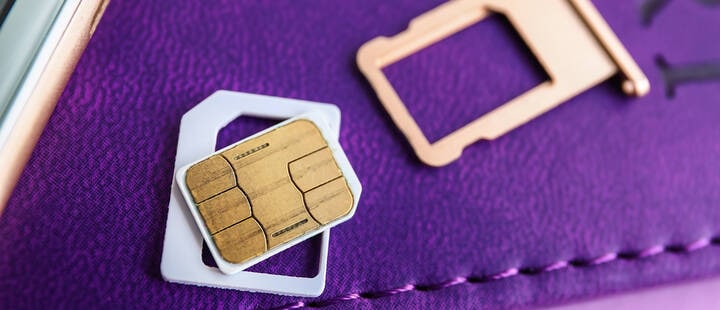
A Bali SIM card is a small, removable piece of plastic with a circuit-embedded chip that you insert into your device to connect Indonesia’s mobile networks. It allows you to make calls, send texts, and use mobile data at local rates.
What types of SIM cards can you use in Bali?
There are three main ways to stay connected in Bali: prepaid SIM cards, eSIMs, and roaming with your existing SIM.
Each option has its pros and cons depending on your budget, phone compatibility, and how long you're staying.
- Prepaid SIMs are the cheapest and most common option for tourists, but they do require a local purchase and a new phone number.
- eSIMs are gaining popularity thanks to their convenience and easy installation, though they often cost more and aren’t compatible with all phones.
- Roaming lets you keep your home SIM and number, but it's typically the most expensive option. Ideal for short stays.
Read more below to decide which option is best for your trip.
1. Prepaid SIM cards in Bali
Prepaid is the most popular type of SIM card to use in Bali. Prepaid SIM cards are physical SIMs you purchase locally, usually with a preloaded data package. You’ll need to remove your existing SIM card to use a prepaid SIM card in Bali – so put it somewhere safe!
-
Advantages
- Budget-friendly: Prepaid SIMs allow you to use the local networks, which is usually less expensive than using international data roaming.
- Good connectivity: Prepaid SIMs connect directly to Indonesia’s major local networks, which means you’ll generally get better coverage and faster data speeds – especially in more remote areas like Uluwatu or Ubud.
- Ease of purchase: Prepaid SIM cards from major providers like Telkomsel and XL Axiata are easy to purchase at Denpasar Airport, local convenience stores, or official retail outlets. Street vendors also sell them, but caution is advised.
-
Disadvantages
- New phone number: Most prepaid SIMs give you an Indonesian number, which can be inconvenient if you’re relying on your usual number for 2FA or messaging apps. However, some providers offer options for international travellers to keep their existing numbers through roaming services or other arrangements at an additional cost.
- Passport registration required: To activate a SIM in Bali, you’ll need to show your passport, and in some cases, the registration process can be time-consuming or require assistance from store staff.
- Potential for scams: Buying from unofficial vendors (like street stalls) may result in SIMs that aren’t properly activated or have limited credit. To be safe, stick to official telco stores or airport kiosks.
- Limited validity: Most prepaid tourist SIMs last around 30 days, so if you're staying longer, you’ll need to top up or buy a new plan.
-
Providers and costs
Telkomsel and XL Axiata are the two major prepaid providers in Bali, both offering strong coverage and competitive prices. The costs for prepaid SIM cards and packages can vary and prices and inclusions are always updated, but for reference:
- Telkomsel: Offers a Tourist Prepaid Card that has 25GB of data and 25 minutes for local calls for IDR 150,000 (~ AUD 15). This cannot be topped up, so a regular prepaid SIM card may be required if you need more flexibility.
- XL Axiata: Plans for a starter pack for a prepaid SIM start at 14GB for IDR 46,000 (~AUD 4.60) Their top-tier plan offers 150GB for IDR 168,000 (~AUD 16.80)
These providers are easy to find around Bali, especially in tourist areas. Most prepaid SIM cards in Bali can be topped up and recharged on the provider's website or app, or credits can be purchased at kiosks, convenience stores or minimarts.
2. eSIM cards
An eSIM (embedded SIM card) is a digital alternative to a physical SIM card and is one of the most convenient ways to stay connected in Bali without swapping physical SIM cards. There is no need to change cards – simply download and get connected. They’re ideal for digital nomads or anyone travelling between multiple countries.
-
Advantages
- Effortless setup: No physical SIM card is required to make local calls, text or use the data network. To use a Bali eSIM card, simply purchase an eSIM plan from a provider and follow the instructions to activate your data plan.
- Easy to organise: Everything can be done online before or after arrival in Bali, making it ideal for short stays or digital nomads (or those who are disorganised!).
-
Disadvantages
- Higher cost: eSIM cards tend to be more expensive than prepaid SIM cards.
- Device compatibility: Not all phones support eSIM technology, so check your device compatibility in advance to avoid any inconvenience or stress during your stay in Bali.
- Data only: Most eSIMs for Bali are data-only and won’t include local voice call minutes or SMS.
-
Providers and costs
Three popular eSIM providers in Bali are Holafly, Wi-FiMap, and TravelSIM. Prices vary by provider, data allowance, and duration. Local Indonesian providers Smartfren, Telkomsel and XL Axiata also offer eSIMs for tourists to purchase.
Costs will vary as fees and inclusions are frequently updated, but to give you an idea:
- Holafly: Unlimited data for 10 days at AUD 57, or 30 days for AUD 117.
- Wi-FiMap: 30-day plans starting with 1GB of data for USD $4.99 (~AUD 8)
- TravelSIM: Offers 30-day plans such as 3GB for AUD 63 and 5GB of data for AUD 93.
- Smartfren: Plans starting at IDR 45,000 (~AUD 4.50) for 5GB of data to IDR 200,000 (~AUD 20) for unlimited data use and a dedicated allocation for WhatsApp usage.
- Telkomsel: Prepaid eSIMs with 3GB of data, valid for 30 days, cost IDR 20,000 (~AUD 20)
- XL Axiata: Plans for a starter pack for a prepaid eSIM start at 14GB for IDR 46,000 (~AUD 4.60) Their top-tier plan offers 150GB for IDR 168,000 (~AUD 16.80)
These plans are ideal for travellers want flexibility and convenience, especially if you’re travelling to multiple countries. It’s worth noting that not all eSIM card options can be topped up – for example, Holafly only has unlimited plans for set durations that can’t be recharged, so a new plan would be required.
3. Roaming SIM card (Using your home provider)
Using a roaming SIM card in Bali means enabling international roaming through your home provider to connect to local Indonesian networks. This is often the most convenient option, but also typically the most expensive – especially for those travelling for an extended period of time.
-
Advantages
- Keep your number: You can continue receiving calls, SMS, and two-factor authentication codes on your usual mobile number.
- Same SIM card: You don’t need to buy or insert a new SIM card to get connected - Most Australian providers will automatically connect to a network once you turn off Airplane Mode.
- No setup required: Since you’re using your existing provider, billing and support are straightforward.
-
Disadvantages
- Higher cost: Enabling roaming on your device can be a costly exercise, especially if your home provider hasn’t capped your usage to a flat daily fee. Data allowances are usually limited, and excess usage can add up quickly.
- Daily data caps: Many roaming plans include a small data cap. Once that’s used, speeds may slow significantly, or you may be hit with extra charges.
- Not ideal for long trips: If you're staying in Bali for more than a few days, roaming costs can add up quickly and end up being far more expensive than getting a local SIM card.
-
Providers and costs
Telstra, Optus, and Vodafone are the most popular providers for international roaming.
- Telstra: A Day Pass package for Indonesia costs $10 a day for 2GB of data and unlimited calls and SMS.
- Optus: The Optus Daily Roaming costs $5 a day for 5GB of daily roaming, and unlimited standard talk and text in Indonesia.
- Vodafone: Many plans allow you to use your included data, calls and texts for $5 extra a day (in addition to your plan fees).
Always check your provider’s website or app for the latest roaming prices, data limits, and activation steps before departing.
What is the best SIM Card for Bali?
The best SIM card for Bali depends on your preferences, priority and budget.
- Best for coverage and connectivity: Local prepaid SIM card
- Best for convenience: eSIM
- Best for short trips or keeping your number: Roaming
But overall, prepaid SIM cards purchased locally are generally the best SIM card option for travel in Bali, as they offer the best balance of affordability, coverage, and flexibility.
Two of the best local providers in Bali are XL Axiata and Telkomsel, which offer tourist-friendly packages and are widely available across Bali .
Where to buy a SIM Card in Bali?
There are four main options for where to buy a SIM Card in Bali: Denpasar Airport, official local providers, local phone stores, and street vendors.
Here’s a closer look at the four main places you can buy a SIM card in Bali:
- Denpasar Airport (DPS): One of the most accessible places to buy a prepaid SIM card for Bali is at Ngurah Rai International Airport (Denpasar Airport). After clearing passport control and walking through duty-free, you'll find several boutiques where SIM cards for Bali are sold, with package and pricing options available. While buying a SIM card at the airport is the fastest way to get coverage once you arrive in Bali, it tends to be slightly more expensive than outside of the airport.
- Official local providers: Bali has several official local operators, with Telkomsel and XL Axiata being two of the most popular brands that offer SIM cards for travellers. These official providers are the best place to go to find the best variety of package options and to discuss your needs and busget. Visit one of their stores or authorised agents located throughout Bali to find the plan best suited to you.
- Local phone stores: Local phone stores are the best choice for those who value personalised assistance. These stores often have knowledgeable staff who are able to assist you in selecting the right SIM card provider and package for your requirements. Some of the most reputable local phone stores for purchasing a SIM card for Bali are Sona Cell Bali Data Sim Card or SIM CARD Y&R Cell in Badung Regency.
- Street vendors: Street vendors are a good option for budget-conscious travellers looking for a local SIM card to use in Bali, but be sure to exercise caution if going down this route. Ensure that the SIM card you buy is from a reputable provider and request assistance with the registration process, which is mandatory for all SIM cards in Indonesia.
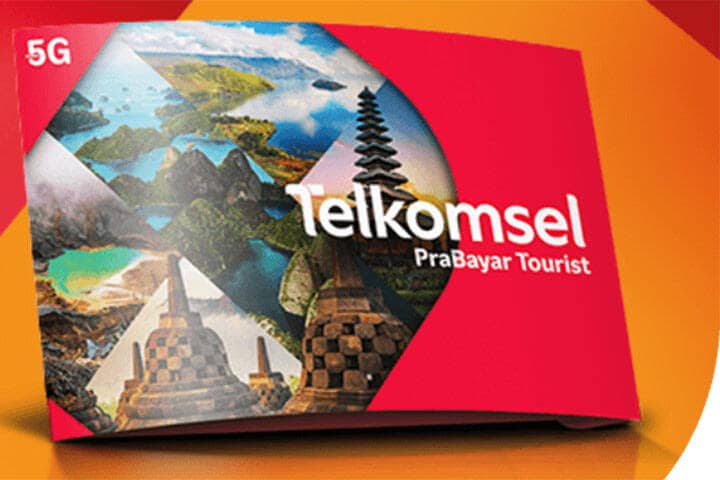
Best for: Reliable connection across the island, especially for more remote areas.
Telkomsel is widely regarded as the best SIM provider in Bali, with generous data plans and the most reliable 4G/5G network — especially in remote areas like Ubud, Nusa Penida and Lembongan, where other networks may struggle to get a stable Wi-Fi connection. Telkomsel offers tourists to Bali both physical SIM card and eSIM card plan options.
Check out Telkomsel SIM card options
2. XL Axiata – Fast speeds and user-friendly app

Best for: Wide range of plans options for travellers staying mainly in the south of Bali
XL Axiata is a solid alternative to Telkomsel, offering fast speeds in the Denpasar and Badung areas and a rapidly expanding 5G network. It's worth noting that XL Axiata's internet coverage in Ubud is somewhat limited.
XL Axiata also offers added convenience through its user-friendly app, "myXL," which allows you to easily manage your account, check your balance, monitor data usage, and conveniently top up both credit and data as needed.
XL Axiata offers tourists to Bali both physical SIM card and eSIM card plan options.
Check out XL Axiata SIM card options
3. Indosat Ooredoo – Budget-friendly options
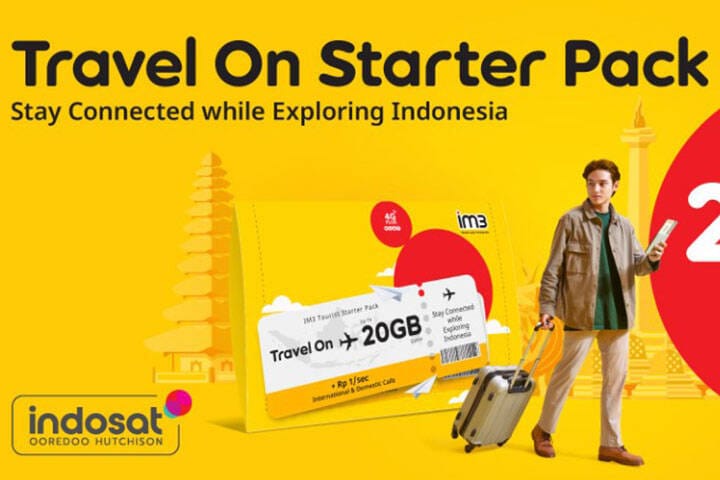
Best for: Budget-conscious travellers on short stays or with light internet use
Indosat Ooredoo is a reliable provider for travellers who want an affordable option to stay connected in Bali, especially for shorter trips (from 14 to 30 days). For extended stays or additional data needs, travellers are able to purchase an Extra Booster add-on once starter packs have expired.
While their 5G coverage is limited on the island, it is expanding and 4G coverage is comprehensive and available island wide.
Check out Indosat Ooredoo Starter SIM card options
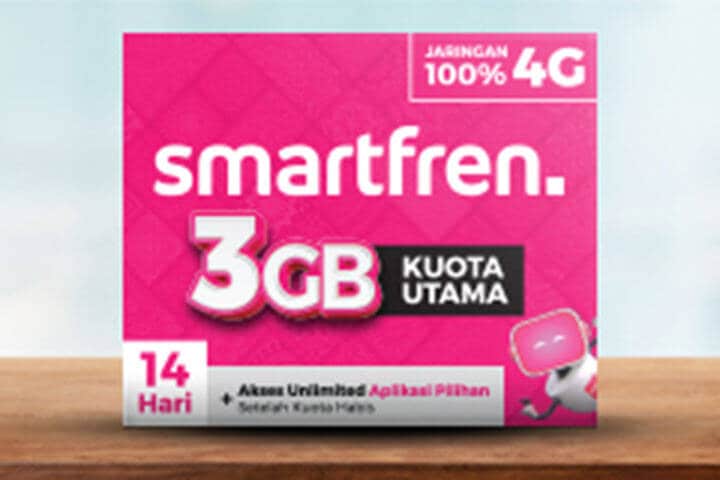
4. Smartfren - generous eSIM plans
Best for: Travellers who want an eSIM and Whatsapp users.
Smartfren is one of the best eSIM card-only providers in Bali, offering tourists in Bali conbenient and flexible options. Their Tourist eSIM plans offer generous data and the added benefits of 15 minutes of calls to local numbers and the option to extend for up to 90 days. Smartfren also has a dedicated data allocation for WhatsApp use, which is useful for travellers who mostly stay connected via the app.
How to recharge SIM Cards in Bali
Recharging your SIM card once your data package has been used or expired is easy, with several convenient options available. The easiest way to recharge a SIM for travellers in Bali is to head to the storefront of your plan's provider, where staff usually speak both English and Indonesian and have plenty of experience in helping tourists set up, extend and top-up their plans.
Here are more details the three main ways to recharge your Bali SIM card:
1. At an official provider store
Visit a nearby store or authorised reseller of your SIM card provider. Let staff know you you'd like to top up, choose your data amount, and provide your phone number. Payment is processed on the spot, and you'll get confirmation once the recharge is complete.
2. By phone
Call your provider’s customer service number (usually found on your SIM packaging or website). Follow the voice prompts to choose your top-up amount, enter your SIM number and payment details, and confirm the recharge.
3. Via mobile app
Download your provider’s official app (like myTelkomsel or myXL), log in and navigate to the top-up section. Select your data plan, pay using a card or digital wallet, and your balance will update immediately.
Tips for using SIM cards in Bali
Here are some practical tips to help you get connected in Bali and have a seamless experience:
- Check your phone's compatibility: Before purchasing a SIM card or eSIM in Bali, make sure your phone is unlocked and compatible with the local network. This ensures that the digital or physical SIM card purchased in Bali will work with your device.
- Verify coverage: Most areas in Bali have good coverage and a strong signal, but remote regions like Nusa Penida or Ubud may have patchy service. Choose a provider known for wider coverage if you plan to explore beyond tourist hubs and wanted to be easily contactable.
- Registration process: Indonesian law requires SIM registration, so make sure to register your Bali SIM card immediately after purchase. Failure to register within a specific timeframe can result in disconnection.
- Monitor your data usage: Use your provider’s app or website to keep an eye on your data usage to avoid unexpected charges while you are in Bali.
- Pick the right data package: Check the different data packages offered by the various SIM card providers in Bali and choose the one that best fits your needs, your length of stay, and how much data you’ll need.
Bali SIM cards - FAQs
-
Is the Wi-Fi good in Bali?
While you'll find Wi-Fi connections all over Bali, it isn't always reliable (or fast!).
Wi-Fi in Bali isn’t always reliable and can be a bit hit-and-miss. Many hotels, cafés, restaurants, beach clubs and villas offer free Wi-Fi, but the speeds and reliability vary widely. The availability and quality of Wi-Fi internet in Bali has improved significantly in recent years, and tourist hubs like Canggu, Ubud, Seminyak, and Kuta tend to have better connectivity, but it’s always a smart idea to check online reviews for different venues before relying on the Wi-Fi in Bali
If fast and consistent Wi-Fi while in Bali is a high priority – especially if you’re a digital nomad and need to do some work – head to a co-working space like Outpost or Biliq.
-
Should I use international roaming instead of a SIM card in Bali?
Whether or not data roaming is suitable for your Bali trip depends on your individual needs. Generally, it's more expensive to use data roaming compared to a prepaid SIM card or an eSIM, but the upside is that it’s convenient to connect and set up, and you don't have to change your phone number. Usually, your provider will register that you're overseas and add any additional fees to your next bill, so the setup and admin is minimal
Even though international data roaming has become less expensive over the years - costing around AUD 5 – 10 per day, depending on your provider and plan - it can still be a costly option. Exceeding the daily limit for international roaming can lead to exorbitant charges that would be far more expensive than organising a local SIM card. Additionally, while data roaming provides connectivity, the coverage and quality of service is not always as reliable as using a local SIM card, especially in more remote areas of Bali.
-
What is the best Bali SIM card for convenience?
eSIM cards are the most convenient option for travel in Bali as they’re easy to buy online and set up, and it's simple to switch plans if needed. Plus, they’re great if you’re travelling to multiple countries on your trip.
One of the best things about an eSIM card is that you don’t need to purchase a physical SIM card, making them the best option for convenience and ease of activation. As eSIM cards are a digital form of SIM card, you can purchase one online from websites like Holafly, Wi-FiMap or TravelSim. Smartfren is an Indonesian provider with eSIM only plan, while XL Axiata and Telkomsel have also introduced eSIM card options for connectivity in Bali.
Because eSIMs are usually data-only, you may still incur roaming fees for calls and texts through your regular SIM. To avoid this, use internet-based apps like WhatsApp, Skype or FaceTime.
-
What is the easiest option to get connected in Bali?
The easiest — but often most expensive — option is enabling international roaming with your home provider. You won’t need to change your number or install a new SIM, but be aware of daily caps and data limits.
-
Can I get a SIM at Bali airport?
Yes! You can buy a SIM card when you arrive at I Gusti Ngurah Rai International Airport (Bali Airport). Both Telkomsel and XL Axiata have stores in the arrival terminal, but keep in mind that plans can be more expensive in the airport than in Bali.